WHERE TO LOOK
Loose on the beach
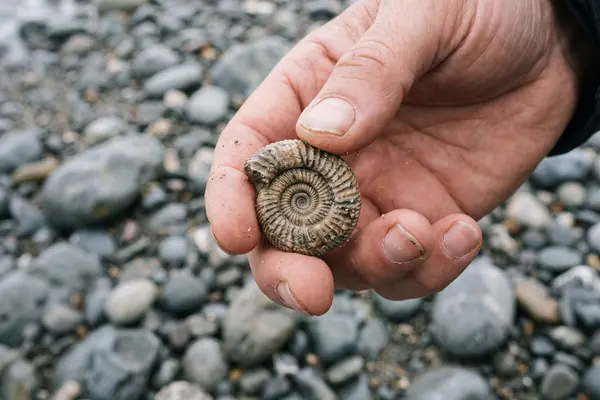
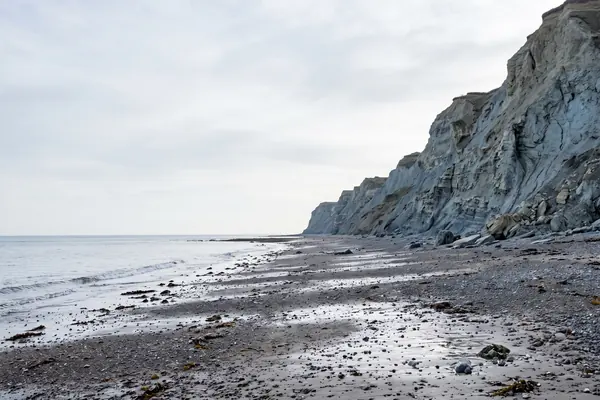
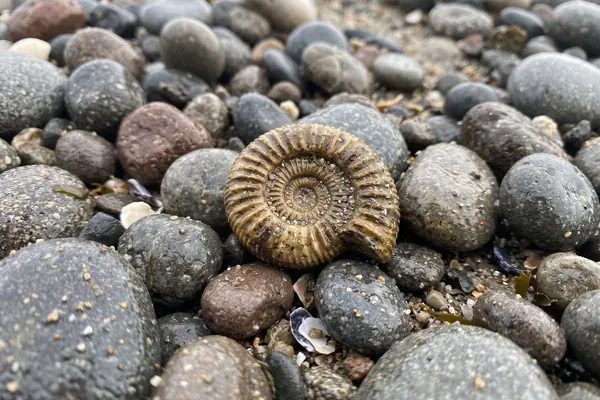
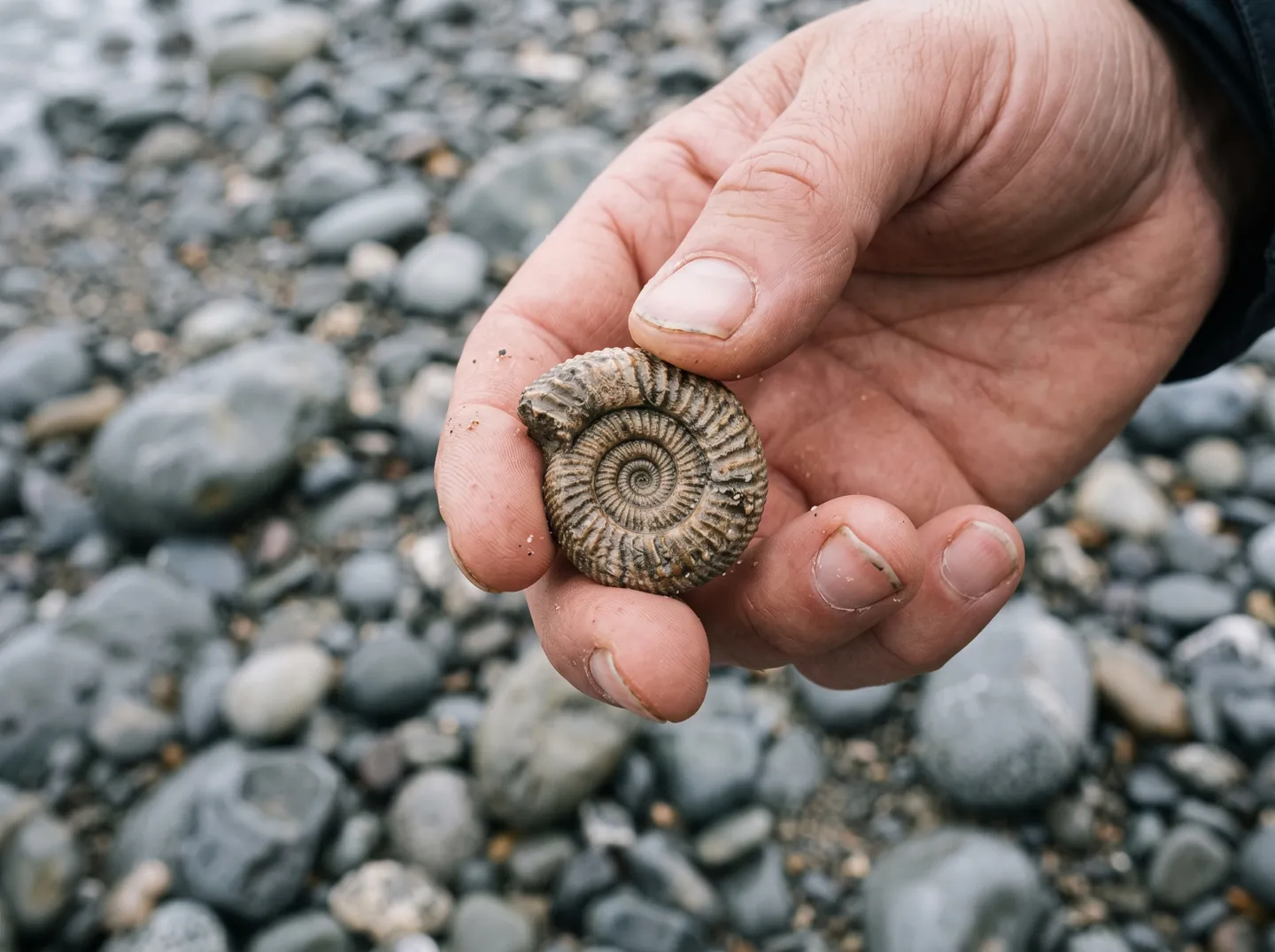
The Charmouth centre says the best place to look is in the loose material on the beach, not in the cliffs.
Check before you go thefcl
AN INFORMATIONAL GUIDE: FOSSIL COLLECTING LORE
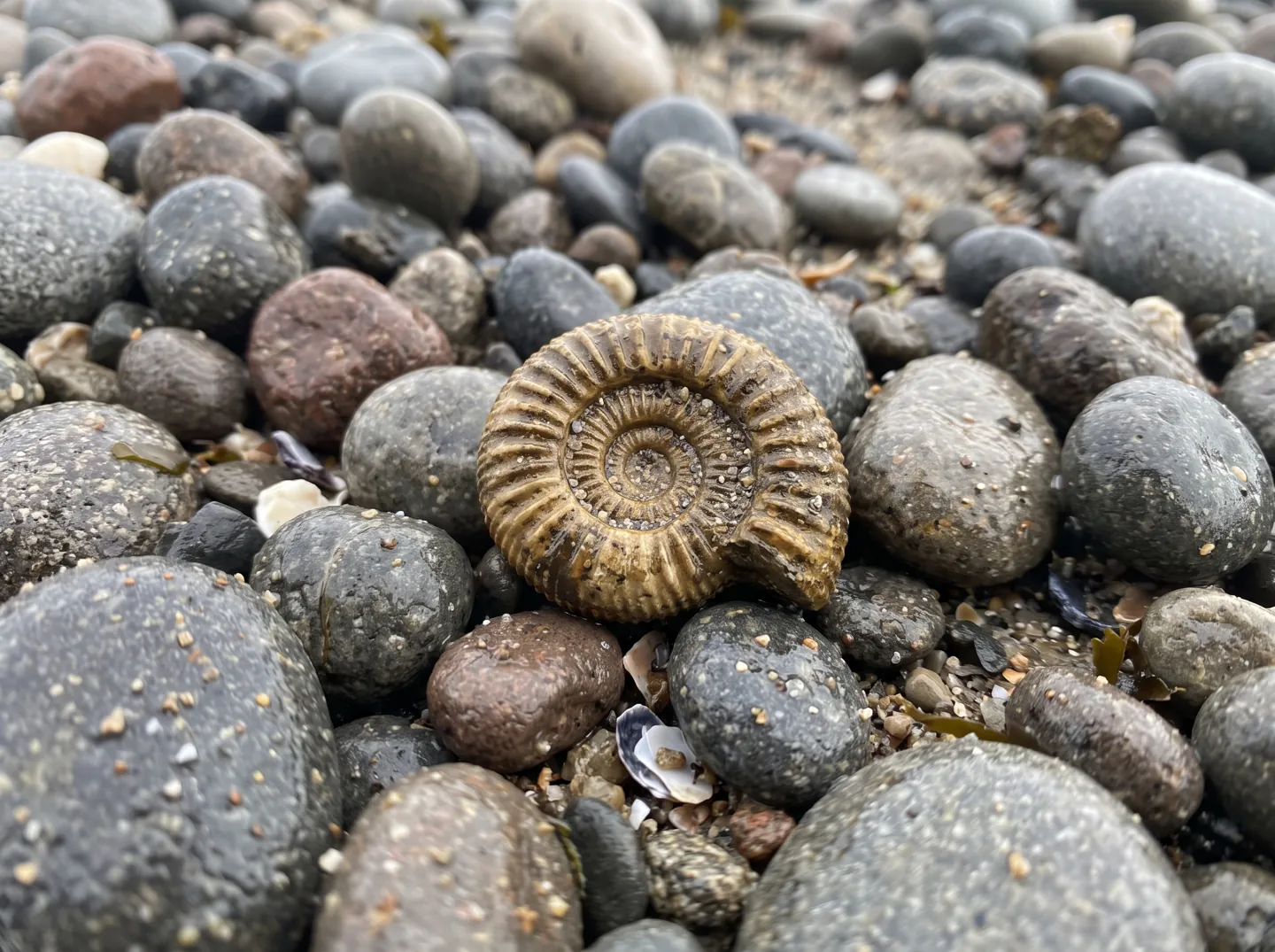
The best fossils are already lying on the beach.
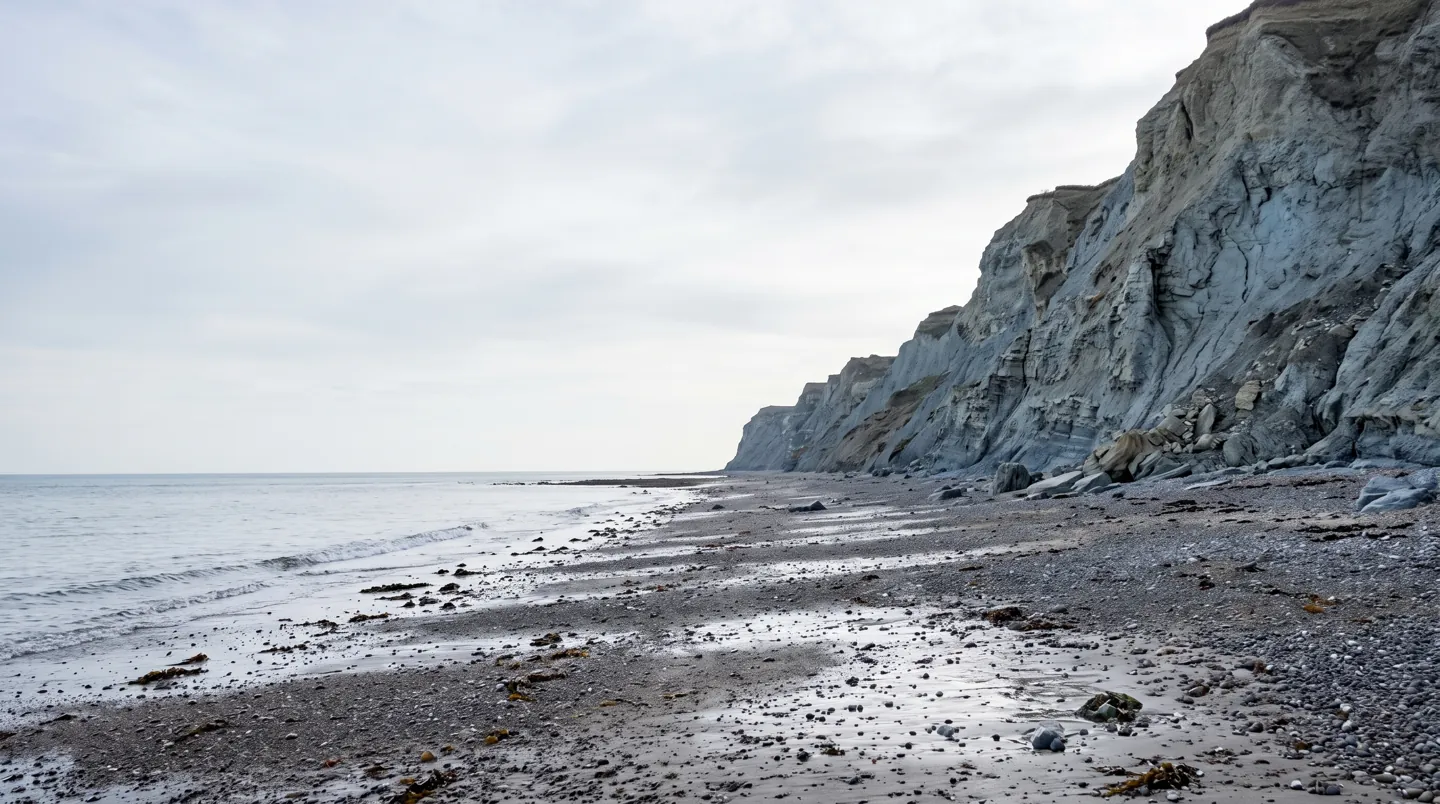
FALLING TIDE away from cliffs
250+ Specimens recorded for the code
Here FCL stands for fossil collecting lore: this is an independent informational guide, not an organisation. Around Charmouth and Lyme Regis, fossils wash out of the cliffs into the shingle, and a simple code shapes how they are collected and recorded.
THE SHORT ANSWER
Charmouth Heritage Coast Centre: fossils that are not
collected will be destroyed by the sea.
WHERE TO LOOK
The Charmouth centre says the best place to look is in the loose material on the beach, not in the cliffs.
Check before you goTHE CODE
The collecting codes ask people not to dig into the cliffs without permission, and to record finds of key scientific importance.
See the numbersWHY IT MATTERS
Erosion keeps exposing fossils. Collecting rescues them before the sea breaks them up, so the code encourages it, sensibly.
Stay safeCHECK BEFORE YOU GO
Pick the situation. The bar shows how good a time it is, going by the safety tips and collecting code below.
Based on Charmouth Heritage Coast Centre guidance and published Jurassic Coast safety tips. Always check local signs, tide times and conditions on the day.
FOUR SAFETY HABITS
These follow published Jurassic Coast safety tips.
Look up tide times before you go, plan around a falling tide and leave plenty of time to return.
Rock falls and landslides happen suddenly. There is no need to go near the cliffs: fossils wash onto the shore.
Wear sturdy boots with good grip, and bring layers and rain gear as the weather can change quickly.
Carry a phone, let someone know where you are going and when you expect back, and consider a guided fossil walk.
TWO NUMBERS WORTH KNOWING
Both figures come from the
Charmouth Heritage Coast Centre.
250+
Specimens recorded for the code
Many have been acquired by museums through donation or sale, and others are available for research.
RECORDING · CHARMOUTH
200+
Years of study of Dorset's Lower Lias
Even so, discoveries new to science are still being found on this stretch of the Jurassic Coast.
STUDY · CHARMOUTH
The centre describes the Charmouth and Lyme Regis area as one of the most important sites in the world for Lower Jurassic fossils.
SHARING THE FINDS
The Charmouth centre says that collectors who follow the code can have ownership of finds on certain land transferred to them, in recognition of the effort of recovery and cleaning.
Important finds should be recorded at the centre so experts can decide whether to study them, and anyone wanting to sell an important fossil is asked to offer it first to an accredited UK museum. The centre also relies on local collectors: they can go out at a moment's notice after big winter storms and landslides, and their knowledge of this coast makes them key to recovering scientifically important specimens.
Questions
Fossil collecting lore. This is an independent informational guide, not an organisation, museum or heritage centre.
In the loose shingle and gravel on the beach, where fossils wash out of the cliffs. Not in the cliffs themselves.
The collecting codes ask people not to dig in situ without permission, and the cliffs are unstable.
Record finds of key scientific importance at the Charmouth Heritage Coast Centre, whose wardens can also advise on what you have found.
The approach was developed by Natural England, the Joint Nature Conservation Committee and the Jurassic Coast World Heritage Site team, the centre says.
Because fossil sites differ in how sensitive they are to collecting. The Charmouth Heritage Coast Centre explains that at sites like Charmouth, erosion keeps exposing fossils and the sea destroys any that are left, so active collecting rescues them. Other sites, such as a cave deposit or an abandoned mine tip, hold a finite supply, and collecting there can damage or even destroy them.
Two codes cover the area: the West Dorset Fossil Collecting Code of Conduct and the Undercliffs National Nature Reserve Fossil Collecting Code and Recording Scheme. They ask collectors not to dig in situ in the cliffs without permission and to record scientifically important finds, at the Charmouth Heritage Coast Centre or through fossilcodes.org.
Updated
ABOUT THIS NAME
thefcl.org is part of the DoodleSale portfolio. It isn't in an auction right now, but you can ask about leasing it.